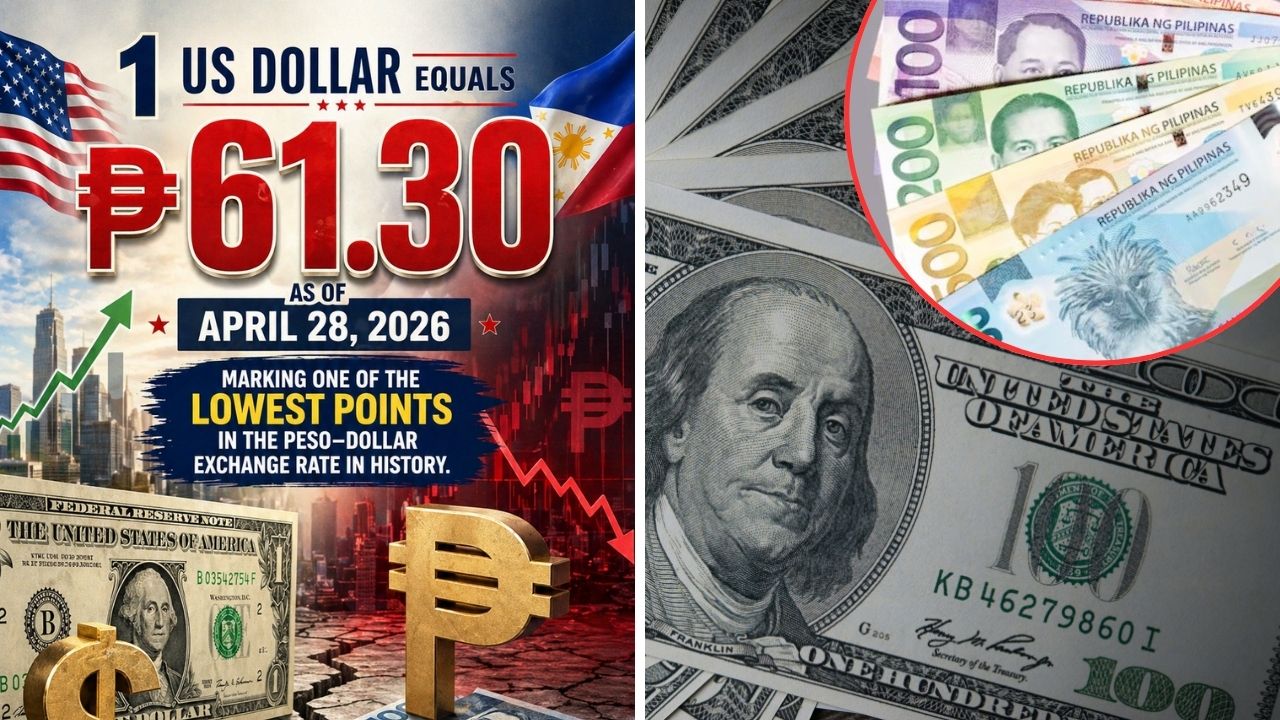
The Philippine peso has reached a new record low, closing at ₱61.30 to the US dollar on Tuesday, April 28, 2026. This marks a significant depreciation from its previous low of ₱60.748 recorded on March 31. The peso opened trading at ₱60.80 before sliding further throughout the day.
Implications of the Peso’s Weakening
The peso’s depreciation has both positive and negative effects on the economy:
- For OFW Families: Overseas Filipino Workers (OFWs) and their families may benefit from higher peso conversions for dollar remittances.
- Rising Import Costs: Essential imports like oil, food, and fertilizers are becoming more expensive, contributing to inflation.
- Debt Servicing: The government faces higher costs in servicing foreign-denominated debts, which make up a significant portion of the national debt.
Expert Insights
Investment banker Stephen CuUnjieng described the breach of the ₱61 mark as “psychological,” emphasizing the country’s reliance on imports as a key factor. Christina Ulang, Head of Research at First Metro Investment Corp, highlighted the vulnerability of the Philippines due to its dependence on imported goods, particularly oil. According to an interview in ANC News Channel.
Ulang noted that the current situation mirrors the economic challenges faced during the 2022 Russia-Ukraine war, with rising import bills and inflationary pressures. She also pointed out that other Southeast Asian nations are experiencing similar struggles.
Economic Outlook
The peso’s value at the start of President Ferdinand Marcos Jr.’s term was ₱54.975, underscoring the significant depreciation over the past few years. Analysts warn that continued geopolitical instability and import dependence could further weaken the currency, impacting the broader economy.