Philippines – Confusion has been swirling among Filipino workers abroad over how much financial help awaits them upon returning home. The Philippine government has now stepped in to set the record straight: the ₱10,000 many have heard about is only the first slice of a much bigger support package.
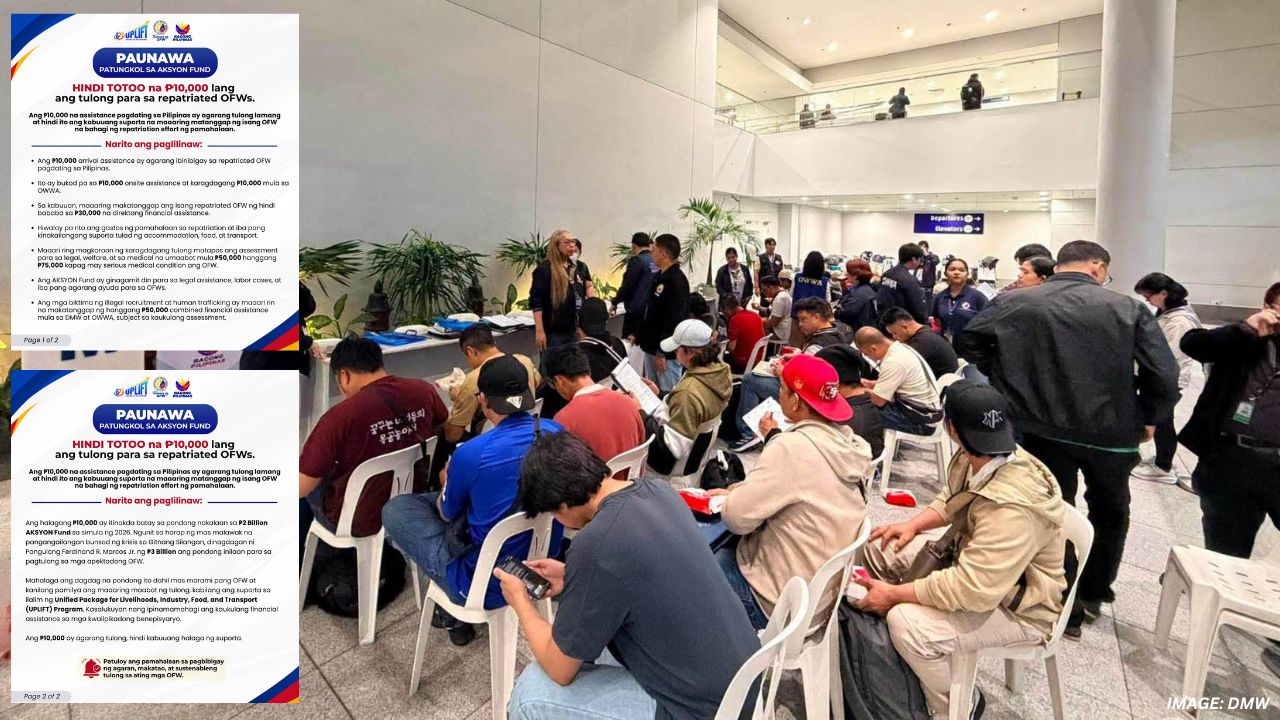
According to an official advisory released by the Department of Migrant Workers (DMW), the ₱10,000 arrival assistance handed to repatriated OFWs is immediate aid given the moment they land in the Philippines. It is not, the department stressed, the total amount of support a returning worker can expect.
What the Full Package Really Looks Like
Instead of a single payout, qualified OFWs may receive several forms of direct financial assistance. Combined, these add up to a far more meaningful sum:
- ₱10,000 arrival assistance — given on arrival in the Philippines
- ₱10,000 onsite assistance — provided while still abroad
- ₱10,000 from OWWA — an additional layer of support
That brings the baseline to at least ₱30,000 in direct financial aid per repatriated worker. On top of this, the government covers repatriation costs and essentials like accommodation, food, and transport.
Extra Help for Those Who Need It Most
Some OFWs face heavier burdens, and the assistance reflects that. After proper assessment, additional support may be released for legal, welfare, and medical needs.
- Workers with serious medical conditions may receive ₱50,000 to ₱75,000.
- Victims of illegal recruitment and human trafficking may qualify for up to ₱50,000 in combined aid from the DMW and OWWA.
The AKSYON Fund also bankrolls legal assistance, labor case support, and other urgent help for distressed workers.
Bigger Fund for a Growing Crisis
The ₱10,000 arrival figure was set based on the ₱2 billion AKSYON Fund allotted at the start of 2026. But rising tensions in the Middle East have pushed demand higher. In response, President Ferdinand R. Marcos Jr. added ₱3 billion to the fund to reach more affected workers and their families.
Part of this expanded support flows through the Unified Package for Livelihoods, Industry, Food, and Transport (UPLIFT) Program, with financial assistance already being distributed to qualified beneficiaries.
The message from Manila is clear. That ₱10,000 is a starting point, not the finish line. For OFWs weighing their options during uncertain times, knowing the full scope of available aid can make all the difference in planning a safe return home.